Preserving the history of Brockenhurst - a wonderful village at the heart of the New Forest
Education in Brockenhurst
For nearly three centuries, Brockenhurst has been a centre of learning, not just for village children, but serving a wide area. It started with one small village classroom; now a primary school and sixth form college serve the New Forest and beyond.
The Church of England Primary School
The present village Church of England Primary School started as a charity school founded with money left by Henry Thurston in 1745, almost 300 years ago.
Henry was born in Brockenhurst in 1692. His family were not wealthy but on becoming his father’s executor, at the age of 13, he was running the family farm, which it is assumed was rented. Later he became the coachman for George Baker, an attorney in Hanover Square, London, whose family home was a fine farmhouse, Brokenhurst Farm (in the modern Brokenhurst Park estate) off Mill Lane.
Henry Thurston died in 1745 and wrote a very detailed will, and significantly he left £500 ‘in order or towards erecting a school for the education of poor boys and girls born in Brockenhurst’. It’s not known where his wealth (worth £130,000 in 2026) came from apart from savings.
By 1749 the Thurston Estate stood at £573.0s.0d and invested in 3 per cent annuities producing £17.3s.10d. each year for the benefit of a school. The Trustees were (former employer) George Baker, Matthew Reynolds, George Etheridge and William Masters, who first met on 30 September 1751 to put plans in place.
On New Year’s Day 1752 the school opened, it is believed at Reynolds Cottage, Mill Lane, (owned by Matthew Reynolds, a trustee) with 10 boys and 10 girls, later increasing to 12 of each.
John Edwards and his wife Elizabeth were appointed as Master and Mistress at £5.0.0 pa each and £5.0.0 was allowed for rent and £40.0.0 for books and other necessities. School hours were, summer 7-11 am and 1-5pm; winter 8-11 and 1-4. No child to attend for more than four years so the first list showing pupils aged six meant that they left school at 10. The Master was required to bring the children to church at all times of Divine Service and in 1752 John Bartor sent a bill ‘for supply of seats for poor children to sit on at the church’.
The school moved in 1760 to Ash Cottage, Lymington Road, and was further endowed in 1804 on the death of Boldre Vicar William Gilpin who left a bequest. At that time Brockenhurst fell under Boldre parish. Rev. Gilpin felt the Brockenhurst school was underfunded and left monies to ensure its continuation, in addition to the Boldre School, which bears his name.
From 1830, Mary Ann Ash was the village schoolmistress, and she ran the school (and later was a teacher) for 52 years. For most of the time she was the entire school staff. Ash Cottage continued as the schoolroom (the name of the location is thought to be a coincidence). A uniform was introduced, with the material being provided by Lady Henrietta Morant. Girls had to sew their own uniform, but it’s thought that female staff at Brokenhurst Park made the boy’s clothes. Lady Henrietta was a significant benefactor, and newspapers referred to ‘Lady Henrietta Morant’s school’.
Mary Ann Ash ran the school from 1830 until 1863 when it moved to the modern Primary School site in Sway Road (then ‘Wide Lane’) where she continued to teach until 1882. It was called the Brockenhurst National School, and opened on 27 April 1863. It had 47 pupils, boys, girls and infants, and a long room was divided into three by heavy curtains. By October that year the number of pupils had risen to 93.
In 1862 the Thurston bequest, had become a proper charity and it’s likely they contributed to the new building, as well as the Morant family. The bulk though came from the Church of England’s National Society establishing the church link which continues today. As well as classes Monday to Friday, there was also an active Sunday School, and village events which involved children, such as shows, were mounted by the combined groups.
Mary Ann Ash never married but devoted her life to the village children. She also arranged large scale pageants and events for royal celebrations. She would arrive in a donkey-pulled cart. Newspaper reports talk of her coordinating up to 250 children at a time for the watching audiences, often in the grounds of Brokenhurst Park.
Mary lived from 1813 until 16 November 1883. She had a reputation for strictness and pupils later said she was very liberal in her use of an ash cane. This was reflected after her death when boys from the village crept up to St Nicholas churchyard and planted the seeds of ash trees around her grave. Their defence later was that it was simply a reflection of her name. One tree eventually grew to more than five metres tall.
The reverse of her gravestone commemorates Mary Ann Ash; ‘The trees whose name in life I bore / Now gather round my grave / They whisper as in days of Yore / Their meaning now I have. / ‘Tis thus, I ween, they sadly say / To us so short a span is given / Then by decay to pass away / But thou are now God’s ash in Heaven.’
School had to be paid for – in 1882 a labourer paid 2d (1p) for one child per week, or 3d for two or more children. The Thurston Charity continued to ensure children of poor people could be educated.
In the late Victorian period, the school was the only place in the village where any form of public gathering could take place. As more citizens became enfranchised it became the place to hold the annual Vestry and political election meetings. The school was used as the village polling station from 1894 until the Village Hall was built.
The school was also was the place where local dances called ‘Hops’, sales of work, and concerts were held. In December 1899, the Brockenhurst Choral Society gave a concert in aid of the Soldiers and Sailors Families Association, connected with the Transvaal War Fund. By then it had come under the control of Hampshire County Council, and the Inspector of Education expressed some concern at ‘extra-curricular’ activities.
Small afternoon church meetings, such as the Mothers’ Meeting (Union), required the school to close early until, in 1910, the Rev. Arthur Chambers obtained an ex-Army hut as a Church Room to be erected in the playground. This was rebuilt in September 1932. Church services were held here when the Parish church was refurbished. Community meetings continued at the school until the 1920’s when the Foresters’ Hall was built in Brookley Road.
School numbers had risen with the growth of the village from 170 in 1899 to 230 in 1910. A much-needed extension was commenced in September 1912 and, by giving the pupils a 5-week Christmas holiday, was completed in early 1913, costing £1,300. This was funded by £500 from the Thurston Trust, £100 from the Diocesan Board, needing a remaining £400 to be raised locally. The village Carnival on Whit Monday 1914 was one of the final events. Hampshire County Council did not contribute, taking the view it was still a Church of England asset, albeit the country oversaw education and teaching.
In the early 1900’s children’s health was still causing pupils to miss education with the closing of the school when half the pupils were infected with influenza, diphtheria, measles, mumps or whooping cough. Exceptional warm weather also resulted in absentees. Children still enjoyed time off from school before WWI to attend the Foresters’ Gala at Whitsun time; the Railway Orphanage’s gala day; the flower show in July and in September the Brockenhurst Races.
A week’s holiday was given to celebrate the Coronation of King Edward VII in 1902 and the then Mrs Morant intimated that it was her intention to present the children with a commemorative medal.
Corporal punishment was administered for poor work, lateness and truancy but this did not cure Henry Willis, a persistent truant. In 1904 he was ordered to an ‘Industrial’ school for three years for correction.
By 1920 motor vehicles were becoming more common on the Sway Road and without a pavement outside the school gates, the entrance was changed to being opposite the farm for the children’s safety.
In 1939 the C of E Primary School had 267 pupils on its roll. The boys’ playground was gravel and extended from the Sway Road to the common. The girls played on a tarred surface, marked out for netball, behind the school house. Daily physical exercise took place in this area. The toilets were out in the playground and regularly froze up in winter.
In the left-hand corner of the boys’ playground was the Church Room, now also used by the senior girls for cookery lessons, as it was equipped with gas and electric cookers.
In September 1939 numbers greatly increased with the arrival at ‘Mardon House’ of the girls’ orphanage, which was evacuated from Southampton. Mardon House is opposite the Roman Catholic Church in Rhinefield Road, and was a small estate with a large house. All the girls under 14 went to the C of E Primary School.
From October, the classrooms were heated by open fires. Pupils could bring a potato to be put under the grate that would be baked in time for the mid-morning break or lunch. The disadvantage of maintaining the coal fires was turned to pupils’ advantage. As restrictions started to take effect and there was a coal shortage, fires could not be kept going during the weekends. This meant that at the start of the week on a Monday the fires couldn’t combat the cold and were not very effective. With the toilets frozen outside also, and the classrooms very cold, pupils were regularly sent home; sometimes for a number of days, enabling them to wrap up well and go skating or snowballing.
After the war, to provide funds for a cycle shed (so pupils did not need to bring their cycles into school) a rummage sale was held. Further improvements were made in the 1950’s when a kitchen was built and connected to the Church Room for the provision of school dinners.
The increased size of the village meant that more and more children attended. The 1970 Village Plan proposed that a new school should be built either at Highwood Road, New Forest Drive, or in the College grounds. All these suggestions were rejected so temporary classrooms were then erected.
A school hall was built in 1995 but some children were still being taught in temporary classrooms. The Parents Teacher Association were pushing for their removal. Faced with the Education Authorities rejection to spend the estimated £30,000 for this, a committee raised the amount locally forcing the County Council to take action and build. The additional accommodation was opened in 1999 by Leslie Cooper, a pupil at the school in 1916. Today a wider view of education prevails and the primary school views education 'as a joint venture, involving everyone – children, parents, staff, Governors and the wider community'.
Brockenhurst College
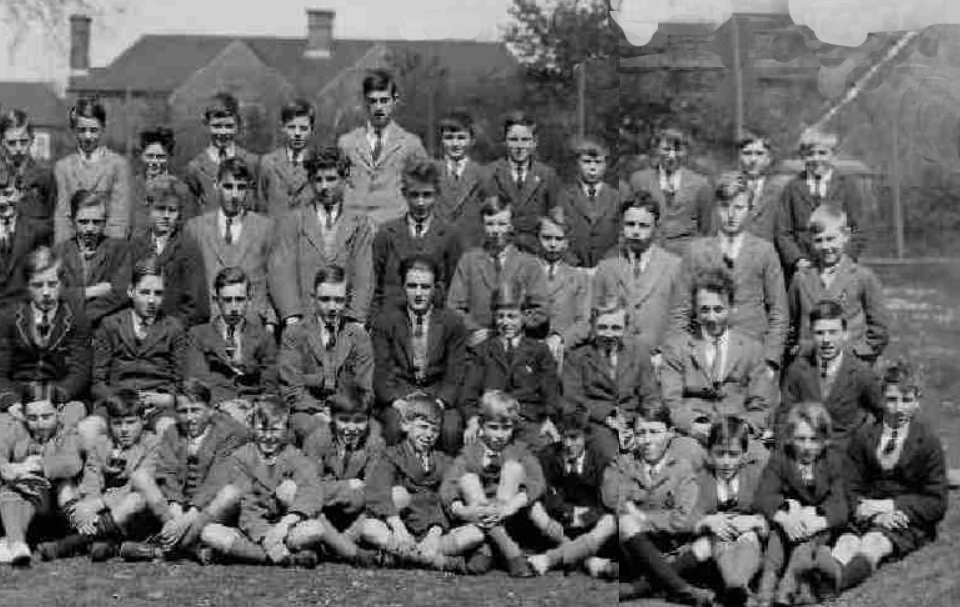
Brockenhurst College, on Lyndhurst Road, began life in 1909 as a Pupil Teachers’ Centre, based in the Methodist Hall on Avenue Road. It outgrew this and was based at Blandford Lodge on The Rise for a time (the bedrooms serving as classrooms). In 1913 Hampshire County Council realised a more permanent solution was needed and bought land in Highwood Road, where a new school was built. It opened in December 1914 with 40 pupils. This had increased to 73 by 1918, and a classroom had to be ‘borrowed’ at the Primary School.
In 1920, Hampshire County Council authorised a further extension at Highwood Road. When the new classrooms opened in 1921 the roll was 155 pupils. Hampshire council renamed the school the Brockenhurst County School and in the 1920’s and 1930’s there was further practical expansion such as a hall, school kitchens (for teaching as well as preparing lunch) and woodwork workshops.
In the late 1930’s Hampshire felt another expansion was necessary – by now the school served a large area, catering from age 11 to 18. It found land at Carey’s Manor Hotel, and bought six acres in 1938 – building began immediately.
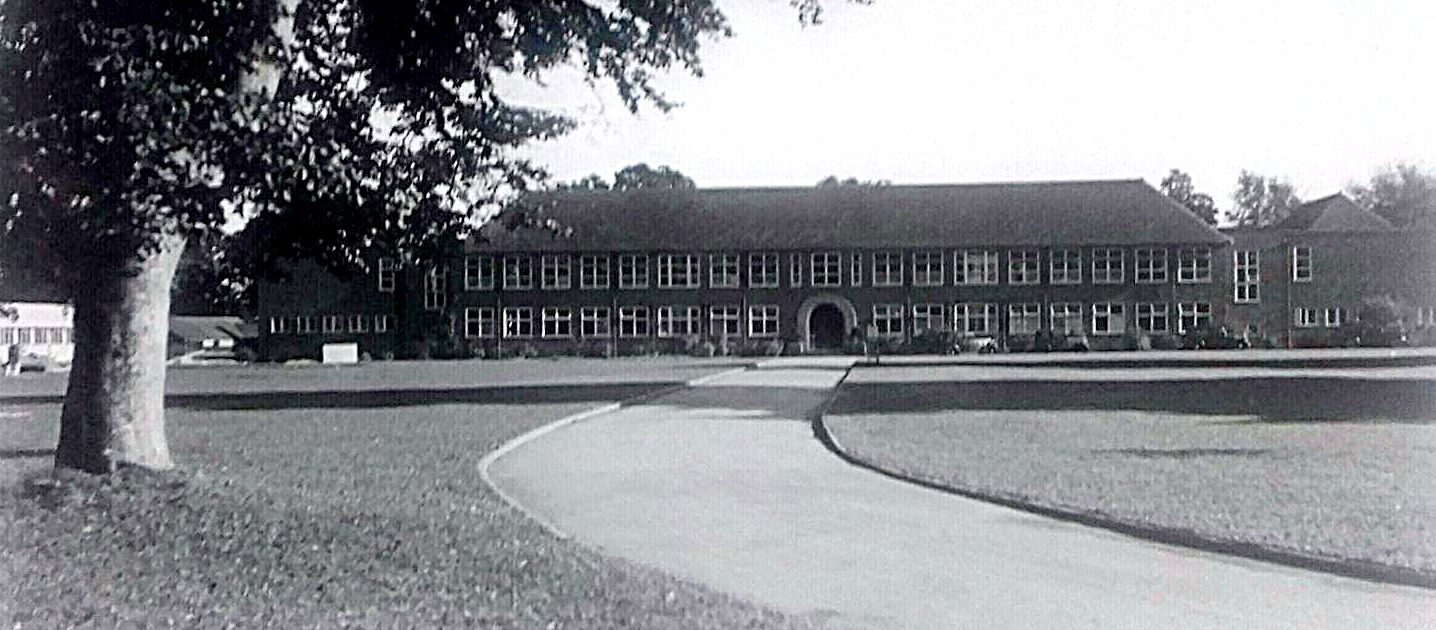
The original building costing £32,000, had 23 rooms. These included 11 classrooms, and specialist rooms for teaching physics, chemistry, art and domestic science. It was the largest secondary school building in Hampshire. It had 160,000 facing bricks. It’s opening went ahead on 19 September 1939, despite hostilities having been declared a fortnight before.
The Lymington Times reported in September 1939 that; ‘It is built to accommodate 500 scholars (boys and girls) who will be taught on the co-educational principle except for some specialised subjects’.
Special attention was made to the décor. The front door was painted ‘Winchester Green’. The interior was painted ‘Hampshire Blue’, and corridors contained 30 Medici prints of noted artists. The floor of the main hall was imported Colombian pine and the stage had dark blue pelmet and curtains.
When the new building opened on Lyndhurst Road, the old Highwood Road site became a secondary school, at first on its own, and then as an annexe to Priestland’s School in Pennington. The Highwood Road site closed in the 1970’s, and the land now houses the Village Hall, MUGA and Doctors’ surgery.
Initially some 300 pupils enrolled at the new county high school. They came from an area including Christchurch (then in Hampshire), Ringwood, Totton, Hythe, and Lymington. It was found that the range of Hampshire accents made some of the children difficult to understand so an elocution teacher, Miss Aggie Graham, was bought in for the first form.
The Headmaster, Mr R. H. May, was assisted by 18 assistant masters and mistresses. A kitchen with three staff provided lunches for the pupils - three shillings a week bought a daily two course meal of meat with two vegetables and a dessert.
A key feature of the college has always been its extensive playing fields which were due to be developed (from muddy fields left over by the building works) after 1939. However, with wartime, the six acres were turned over to vegetables. In 1943 the Headteacher said it was saving £350.0.0 a year. Four hundred meals a day were being served. The school was full, with over 640 pupils including children from Portsmouth who were evacuated for the duration.
After the war, a large house at Culverley, off The Rise, was bought by Hampshire Education Authority and housed 18 boarders initially, and later up to 50 boarding students. The housemaster, Mr. W. Gallimore, was also the producer of the school play but he rejected the offer of a speaking part because of his Hampshire accent. Later Culverley House became a Brockenhurst College day nursery, adult education centre and the art department. In 1988 it transferred to the neighbouring primary school and the land became the school playing fields, as well as private houses.
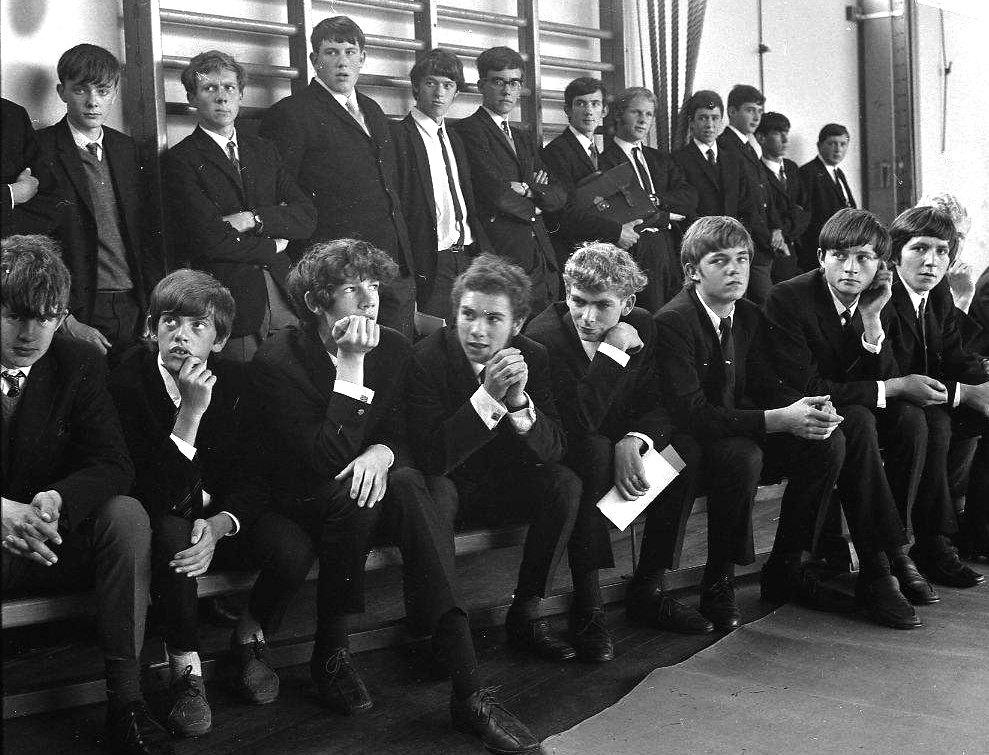
In 1969, the grammar school converted into a sixth form college for those (1115 students) aged 16-18 and underwent several building extensions. From County High School and Grammar School, it became Brockenhurst College offering a wide range of practical as well as academic courses.
The same main building is in use today. Brockenhurst College (with later building additions) now caters for around 8,000 students, including 3,000 aged 16-19 and 5,000 adult learners, and employs some 325 staff of whom 126 are teaching staff.
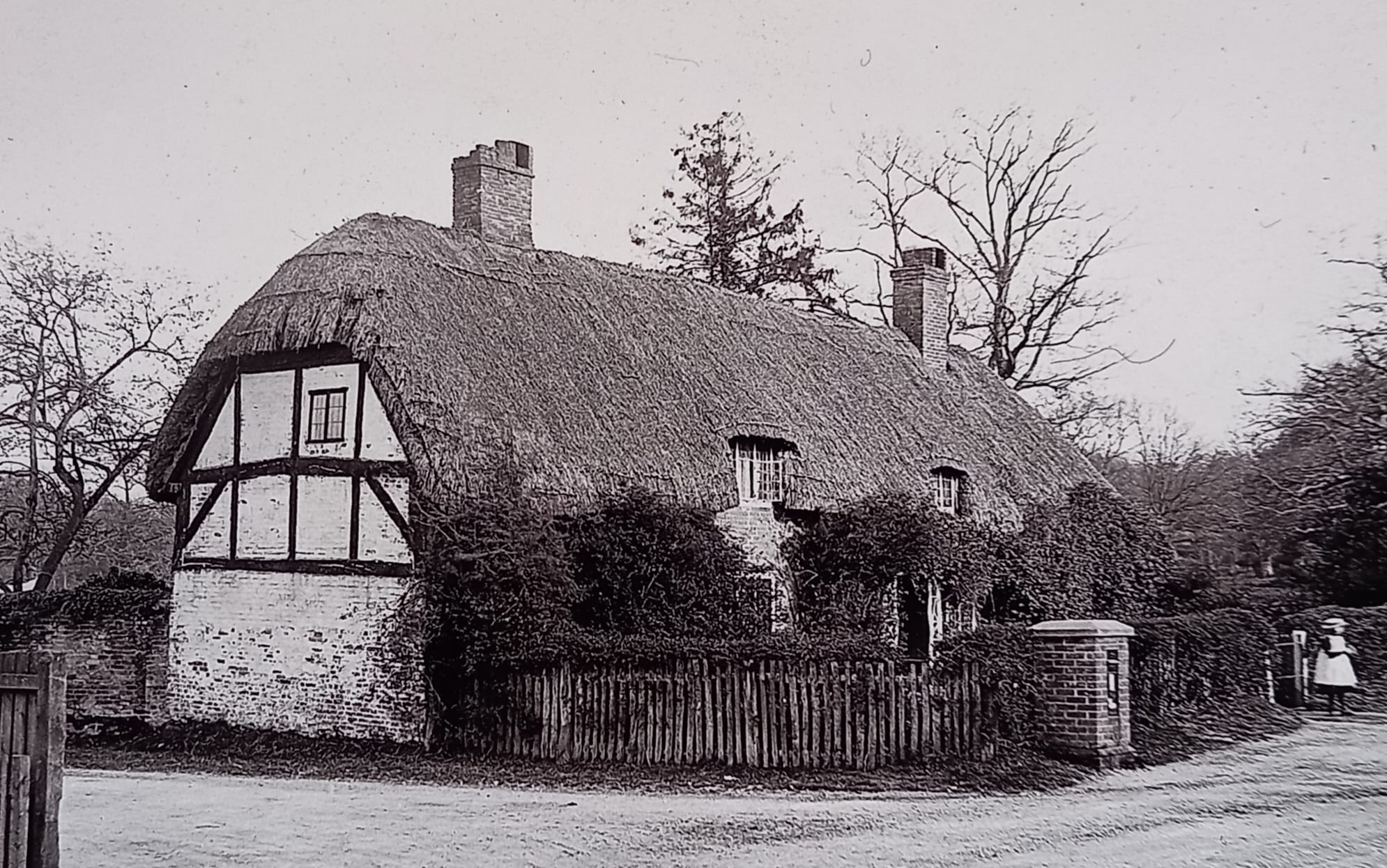
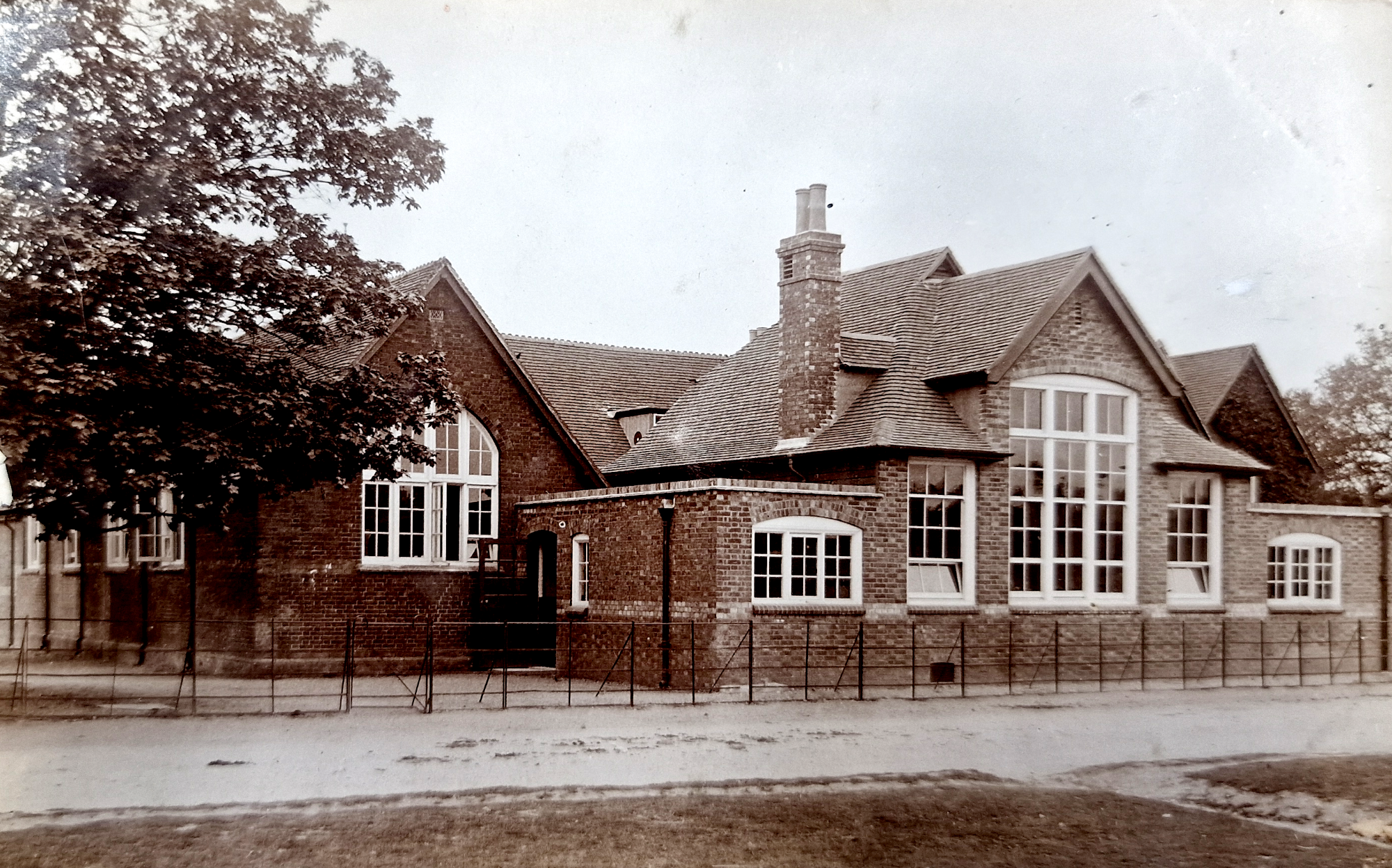
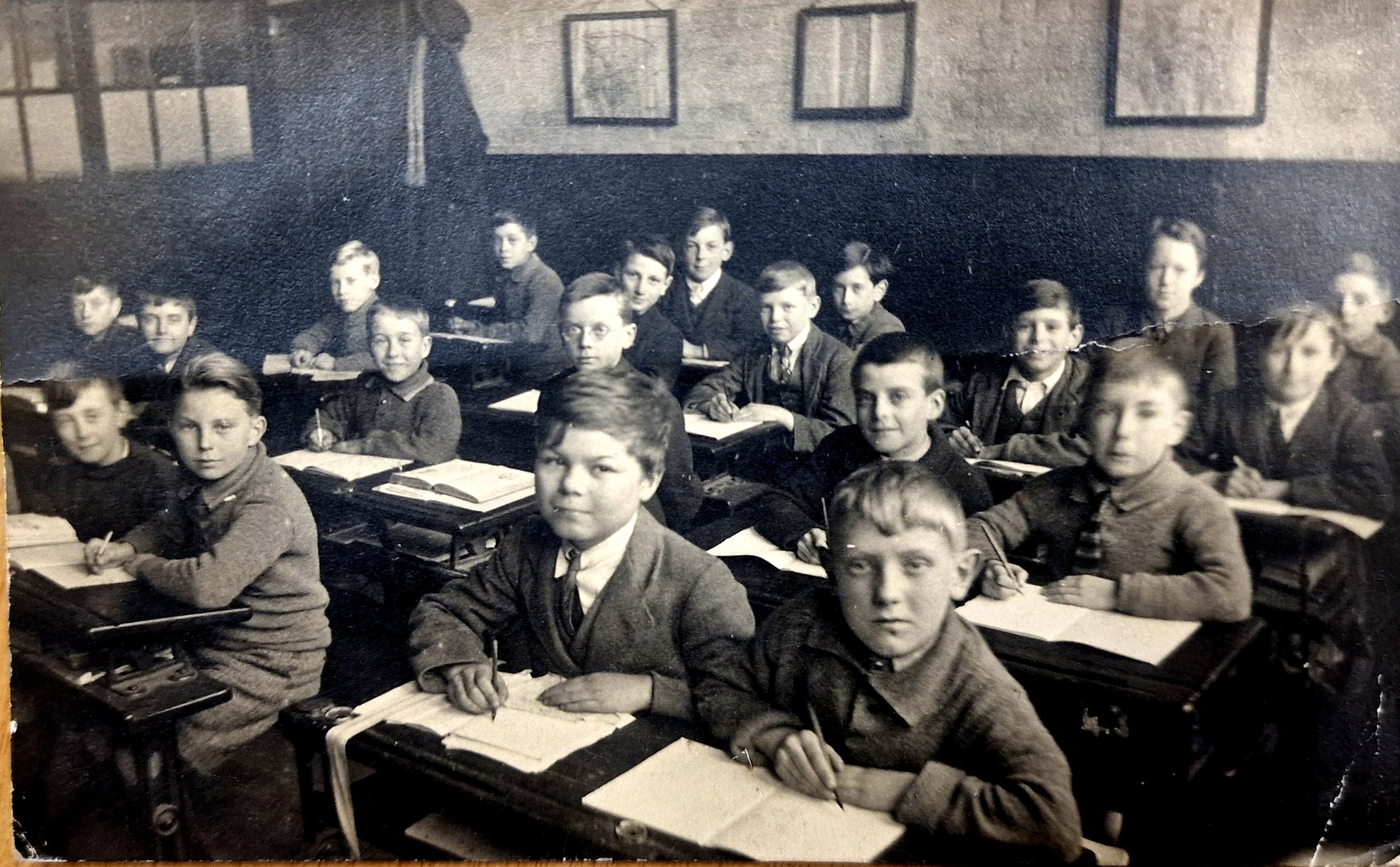
Left to Right. Ash Cottage, the village school from 1760 to 1863; Brockenhurst Church of England Primary School 1914; Pupils in 1924. (Click pictures to enlarge)
Left to Right. Students at Brockenhurst Pupil Teacher Centre, Highwood Road; Brockenhurst County Hight School 1939; Enrolment day at the new 'College' October 1969.
(Click pictures to enlarge)