Preserving the history of Brockenhurst - a wonderful village at the heart of the New Forest
Distinguished families
Brockenhurst families who left their mark on history
Brockenhurst is noted for several families who achieved many great things. They are commemorated at St Nicholas Church, with some having entire walls of plaques dedicated to the. Two deserve not only their place in history, but to be recognised here.
The Bowden-Smith's of Carey's Manor
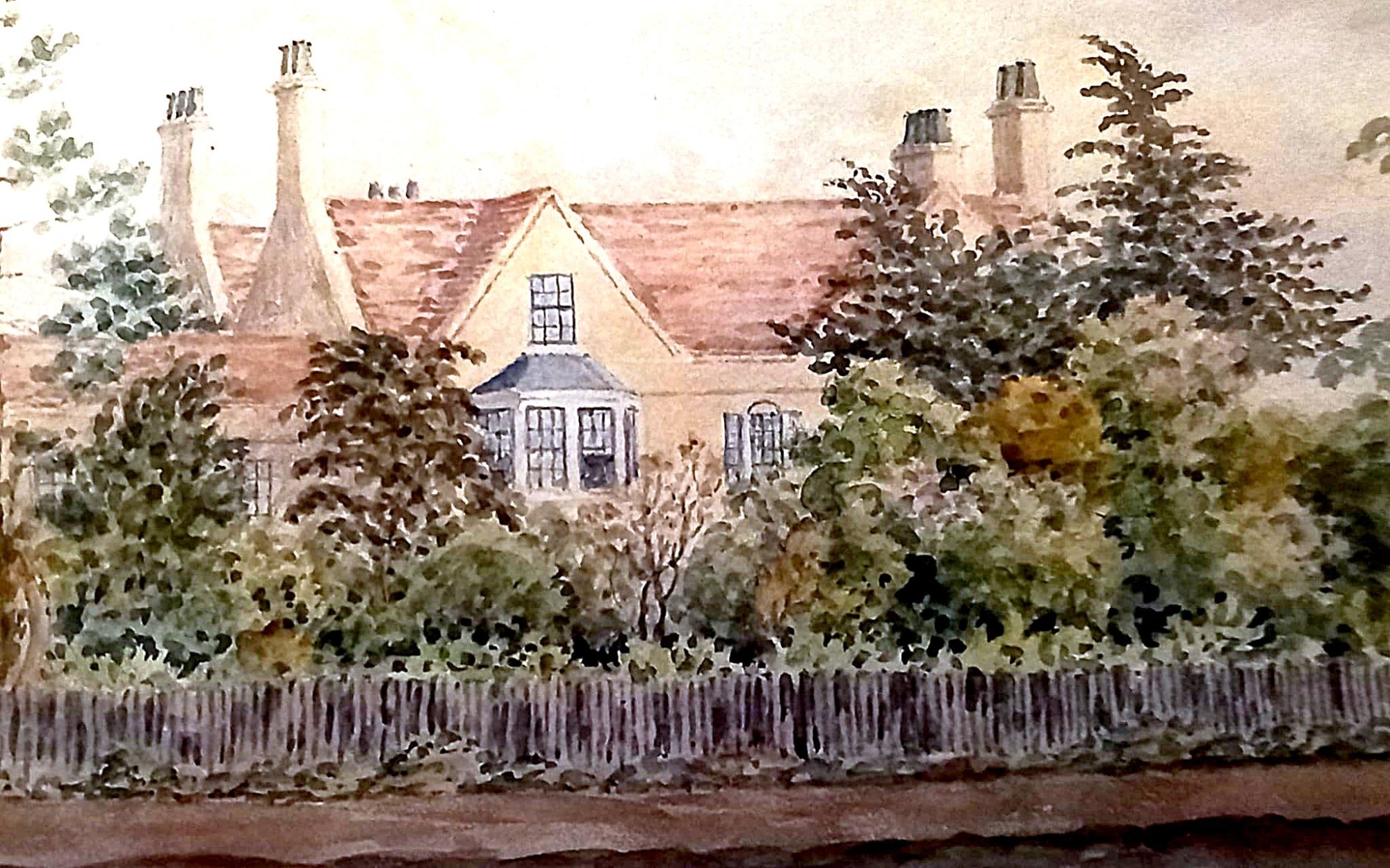
The Bowden-Smiths had lived at Carey’s Manor (previously known as Brockenhurst Lodge - former residents included John Carey, Riding-Forester to Charles II) since the 1790’s. The house is pictured above left in the 1860's. Robert Smith, who was a magistrate and landed gentry with a private income, was married to Anne, and they had ten children. Robert changed the family name from ‘Smith’, to ‘Bowden-Smith’; until then Bowden had been a traditional middle name.
One of the sons, Nathaniel, continued to live at Carey’s Manor (in the 1851 census there were 18 living there including servants) and inherited the property on the death of Robert in 1849. Nathaniel was a wine-seller and Freeman of the City of London, and he and his wife Emily had 12 sons and daughters.
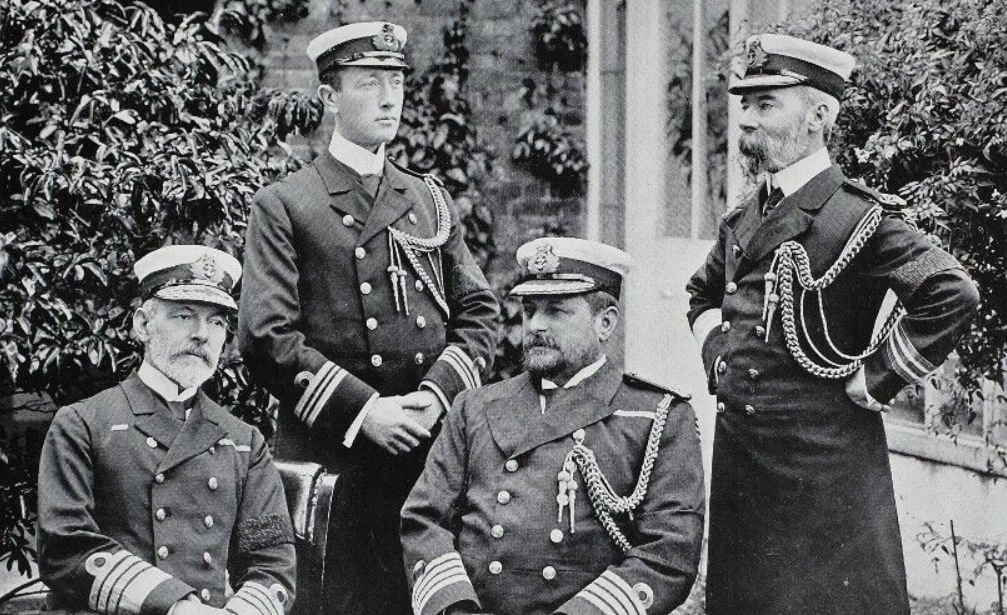
Their most noted son was Admiral Sir Nathaniel Bowden-Smith KCB named after his father. He was born in 1838, and pictured above centre with his key staff in 1900.
He joined the Royal Navy on 11 March 1852. He took part in the Second Anglo-Burmese War later that year and in the Crimean War in 1855. He was present in the China Sea at the Battle of Fatshan Creek in 1857 and the attack on the Peiho Forts in 1858 during the Second Opium War.
In 1866 Nathaniel was awarded the Royal Humane Society silver medal for bravery. On 9 February 1864 Able Seaman William Cross of HMS Pelican accidently fell from the maintop, striking part of the main rigging and into the water. The medal citation went on: ‘the ship going at the rate of seven knots per hour, with a heavy sea. Lieutenant Nathaniel Bowden Smith jumped overboard to his assistance, and held him up until the boat arrived. Without the prompt rescue the man would have perished as he had broken his collar-bone and was much bruised and stunned by striking the rigging, and so rendered incapable of making any efforts to save himself.’
Promoted to Captain in 1872 Nathaniel Bowden-Smith commanded the frigates HMS Narcissus and HMS Undaunted, the battleship HMS Hercules and the corvette HMS Amethyst. He went on to be Commander-in-Chief of the Australia Station in 1892 and Commander-in-Chief The Nore in 1899; effectively Commander of Operations for a third of the Royal Navy based at Sheerness.
In 1873, Admiral Bowden-Smith married, in 1873, Emily Cecilia and they had three daughters. He retired in 1903 to live in London. Nathaniel Bowden-Smith died on 28 April 1921 after an operation and his funeral was held in Kensington. He is remembered by a plaque in St Nicholas Church.
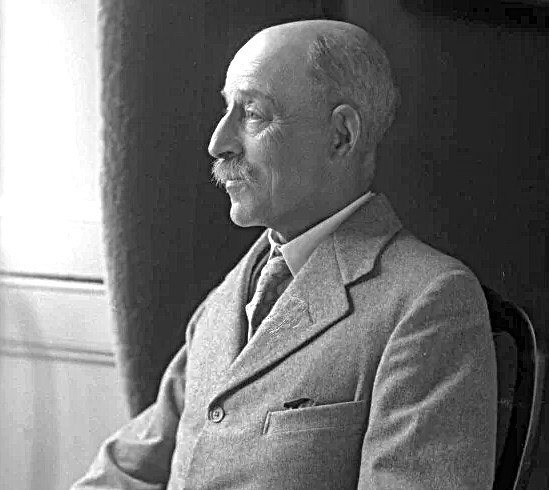
Another of Nathaniel (Senior)'s sons was Reverend Frederick ‘Hermann’ Bowden-Smith MA (1841-1919) pictured above right. He was educated at Rugby School and Oxford University where he played for the first cricket team. Frederick inherited the house when his father died in 1886. He became Rural Dean of Lyndhurst.
In 1886-88 Herman (he’d been born in Germany and later the second ‘n’ was dropped) and his wife Harriet demolished the old house and built Carey’s Manor, now a hotel. The estate was often opened for local charities and groups to hold functions. Rev. Bowden-Smith was also responsible for building Carey’s Cottages as village homes for people (then) of limited income.
In turn their son, another Herman Nathaniel Bowden-Smith, was born in 1877 and was educated at Eton and Oxford. After a career in the Egyptian (colonial British) civil service he became a pillar of the village.
In retirement he became a Brockenhurst parish councillor; a district councillor (Lymington and then New Forest Rural District Council) and a committee member of the Board of Guardians, which ran the Lymington Institute for the Poor. He ran the Boy Scouts committee; Vice-President of the cricket club; Vice-President of the village Conservative Association; a Parochial Church Councillor and a sidesman (volunteer) at Church and a committee member of the League of Nations Union.
Herman Bowden-Smith also established the Brockenhurst Bowls Club at his home, Carey’s Manor. After his death from influenza while on holiday in Switzerland in January 1933, the club continued at Carey’s Manor before it moved to the present village centre site when the house was sold to become a hotel in 1936. On his death The Lymington Times said ‘the New Forest has suffered a great loss…’.
The Fisher's of Whitley Ridge
In the late-nineteenth century Whitley Ridge (now ‘The Pig’ hotel) was the tenanted home of the noted Fisher naval and military family, some of whom are buried in the church yard and commemorated in St Nicholas’ Church.
For a short time after its construction Whitley Ridge was rented to another, before Herbert William Fisher and his family moved in, in 1881. Herbert Fisher was a British lawyer who was born in Wiltshire. His father William was Canon of Salisbury Cathedral from 1834. Herbert was educated at Christ Church, Oxford and on graduating became tutor to the Prince of Wales (from when the future King Edward VII was nine) in 1850.
From 1855 Herbert became a barrister. He served as private secretary to Henry Pelham-Clinton, Duke of Newcastle-under-Lyne, the first Commissioner of Woods and Forests. In 1862 he became private secretary to the Prince of Wales, his former pupil, and Keeper of the Privy Seal, before appointment as Vice-Warden of the Stannaries, Cornwall in 1870.
Herbert married Mary Louisa Jackson in August 1862 in Hendon, Middlesex. She was born in Calcutta, the daughter of John Jackson, physician in the Bengal Medical Service and her younger sister, Julia, was the mother of Virginia Woolf.
Herbert and Mary had seven sons and five daughters raised at Whitley Ridge, several of whom were themselves remarkable.
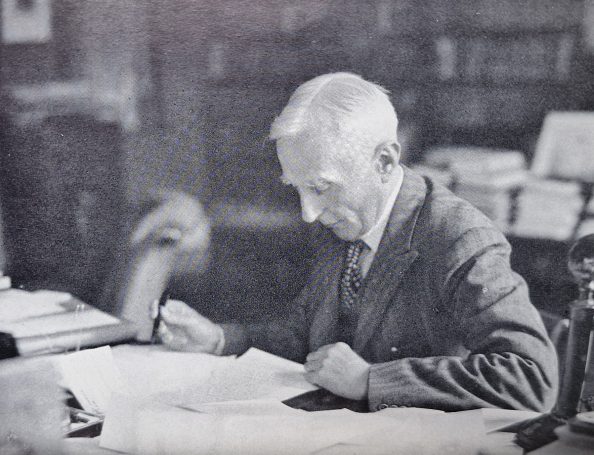
The sons included historian Herbert Albert Laurens Fisher, a tutor in modern history at the University of Oxford (pictured above left in the 1930's). His publications include Bonapartism (1908), The Republican Tradition in Europe (1911) and Napoleon (1913). Between 1913 and 1917 he was Vice-Chancellor of the University of Sheffield.
In December 1916 Herbert A L Fisher was elected Member of Parliament for Sheffield Hallam and joined the government of David Lloyd George as President of the Board of Education. He was sworn onto the Privy Council the same month. In this post he was instrumental in the formulation of the Education Act 1918, which made school attendance compulsory for children up to the age of 14. In 1918 he became MP for the Combined English Universities.
Herbert resigned his seat in parliament through appointment as Steward of the Chiltern Hundreds on 15 February 1926, retiring from politics to take up the post of warden of New College, Oxford, which he held until his death. There he published a three-volume History of Europe in 1935. In 1939 he was appointed first Chairman of the Appellate Tribunal for Conscientious Objectors in England and Wales.
Fisher married the economist and historian Lettice Ilbert in 1899. He died in St Thomas's Hospital, London, on 18 April 1940 after having been knocked down by a lorry and seriously injured the previous week, while on his way to sit on a Conscientious Objectors' Tribunal during the blackout.
Some of his possessions, including his library and some of his clothing, remained untouched at New College. In 1943, Operation Mincemeat, a British Intelligence operation to deceive enemy forces undertook the invention of a false Royal Marines officer, whose body was to be dropped at sea with an attached brief case, in the hope the false intelligence it carried would be believed. As the fictitious Major Martin was to be a man of some means he required quality underwear. With rationing this was difficult to source and the intelligence officers were unwilling to donate their own. Fisher's clothing was obtained, and the corpse used in the deception, dressed in Fisher's quality woollen underpants, succeeded in misleading German Intelligence.
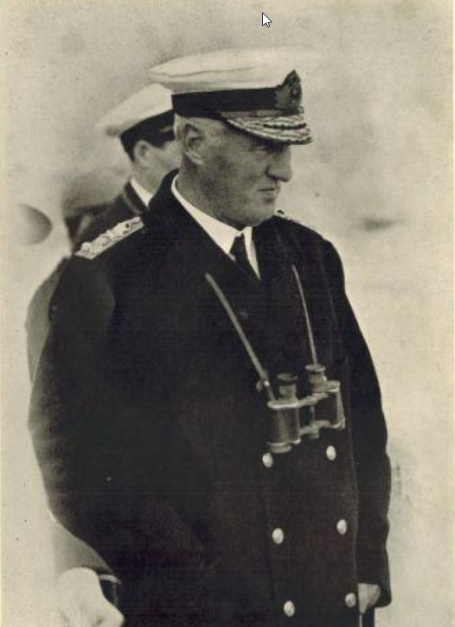
Another son born in Brockenhurst was Admiral Sir William Wordsworth Fisher GCB GCVO (pictured centre, above). He was a Royal Navy officer who captained a battleship at the 1916 Battle of Jutland. From April 1932 he was promoted to full admiral and became Commander-in-Chief, Mediterranean Fleet, hoisting his flag on the battleship HMS Resolution, on 31 October 1932. During more than a decade as a flag officer with the Mediterranean Fleet, he developed a great affection for Malta and his love for the children of the village of Mġarr is marked by ‘Fisher Road’.
He handed over command at the end of March 1936 and went on to be Commander-in-Chief, Portsmouth, hoisting his flag in HMS Victory on 7 July 1936. After the Coronation Naval Review and the King's Birthday Review on Southsea Common, he died in office whilst on leave in late June 1937, after just under a year in post.
He was buried at sea with two six-inch naval gun shells. A predecessor had also died in office but his coffin was not weighted. That funeral congregation watched as the coffin had floated off over the Solent.
The third son was Edmund, born in 1872 and raised at Whitley Ridge. Edmund Montagu Princep Fisher trained as an architect after attending Haileybury College near Hertford. He designed (with others) the protestant Church in Rome and the Hall of Somerville College, Oxford. He was 44 when he joined the army as an Office Cadet in 1916, served the Royal Field Artillery and was sent to France. Early in 1918 he became ill with blood poisoning and appendicitis while in the trenches near Cambrai. His wife successfully applied to visit him at hospital in Rouen and he was then transferred back to a military hospital in Mayfair, London, where he died in March 1918.
A fourth son, Arthur Alexander Fisher, born at Whitley Ridge in 1866 was a Captain in the West Yorkshire Regiment and died on 12 March 1902 at Chiswick House, West London from injuries received in South Africa in the Second Boer War, having also served in India, Egypt and Uganda.
Another son, Edwin Fisher (born at Whitley Ridge in 1883) was an English banker, Chairman of Barclay's Bank from 1936 until his death and President of the British Bankers' Association. He lived in Sussex and in 1943-44 was High Sheriff of the county. He reportedly died at a medical practice in Devonshire Street, London, after a seizure while having dinner with the King and Queen at Buckingham Palace, prior to a tour they were making to South Africa where Barclays Bank had considerable business interests. He died in 1947.
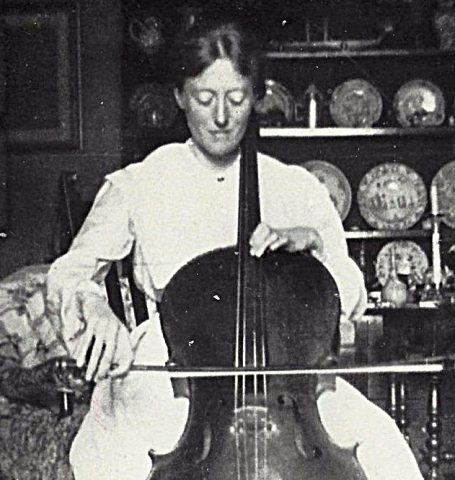
Among the daughters was Adeline Maria (pictured above right) the first wife of the composer Ralph Vaughan Williams. She was an accomplished cellist, pianist and photographer, having been taught by her Aunt Julia Margaret Cameron, who lived on the Isle of Wight. She was married to Ralph Vaughan Williams for 54 years, until her death in 1951. Her grave is near the New Zealand soldiers’ memorial at St Saviours church.
The dynastic father, Herbert Fisher (Snr), moved from Whitley Ridge to Hove in Sussex around 1890. When he died in 1903 the funeral was held in Brockenhurst where he is buried. The King and Queen were represented by Major-General Sir Stanley Clarke.
The Walker-Munro's of Rhinefield House
The Walker-Munro’s weren’t long in Brockenhurst – some sixty five years. They certainly weren’t a dynasty. But they changed the village and much of what we see today is down to them. They deserve their place as a noted family.
In 1885 Thomas Walker, a wealthy coal mine owner of Eastwood Hall Nottinghamshire, purchased the remaining 999-year lease of the Crown Estate and hunting lodge of Rhinefield to mark and gift to his only child and heiress Mabel Zoe Walker as she became engaged to Royal Navy Lieutenant Commander Edward Lionel Munro. He was the son of Sir Campbell Munro of Lindertis and fought in the Khartoum Expedition of 1895, where he was wounded and Mentioned in Despatches.
They married 30 June 1887 and Edward changed his name and that of the family by Royal Licence, to Walker-Munro. Mabel had wanted her husband to take the surname Walker. He declined, not least as he came from the Munro clan who famously first listed the 283 highest hills and peaks in Scotland commonly known as ‘The Munro’s’. So, Mabel and Edward compromised and adopted Walker-Munro as their surname.
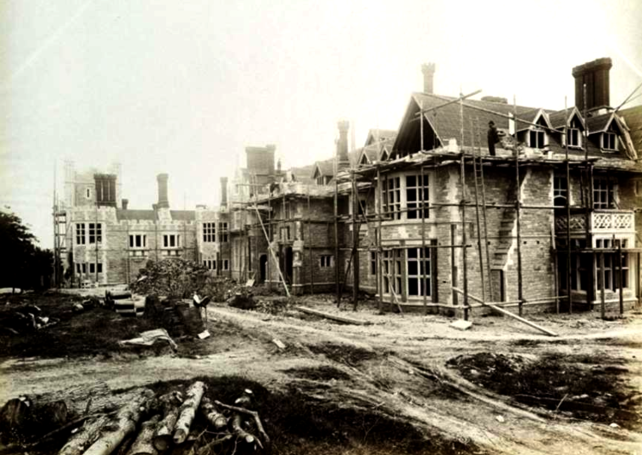
The Rhinefield estate they were gifted extended from the Ober boundary of Whitemoor to the (A35) Lyndhurst Road. After demolishing the original hunting lodge, Rhinefield House (designed by William Romaine-Walker and Augustus William Tanner under instruction from Mabel Walker-Munro) was built in 1890/91 at a cost of £250,000, as pictured above left. This was paid for again, by her father. Nowadays this is Rhinefield House Hotel.
The house was built of Purbeck stone. The family paid for the rail station sidings to be extended to allow transport of the blocks from Dorset, both for building the house and later for St Saviour’s Church, which they also funded.
From the house to the Lyndhurst Road, Edward planted the Ornamental Drive with trees and rhododendrons. Initially all the trees, from temperate zones across the world, were labelled with the country of origin. It being an ancient forest track it was a public right-of-way enabling a visit, but initially was gated at both ends.
The couple moved into Rhinefield House in 1890 after undertaking a honeymoon `Grand Tour', and are said to have admired many architectural styles which they incorporated into Rhinefield House. This included a series of Louis-style French interiors, a Great Hall with a hammerbeam roof and a smoking room in Moorish style (from the Alhambra in Granada, Spain). As well as the main house, there was extensive stabling, laundry and staff accommodation.
They adopted the title of Lords of the Manor of Rhinefield. While Rhinefield was a historic part of the village, there was no actual seat as Lords of the Manor.
In the 1800’s the Victorian county landed gentry did not accept those who acquired wealth from mining or industry into their social circle. Consequently, the established and gentrified Mrs. Morant, of Brokenhurst Park, declined ‘to call and leave her card’ at the couple’s new home, or to receive them. The Morant family also prevented the Walker-Munro’s from acquiring a private and reserved pew as Lord of the Manor at Rhinefield, at St Nicholas’ Church, unlike the Morant’s (Lord of the Manor at Brockley, the other part of the village, with their own pew at the church).
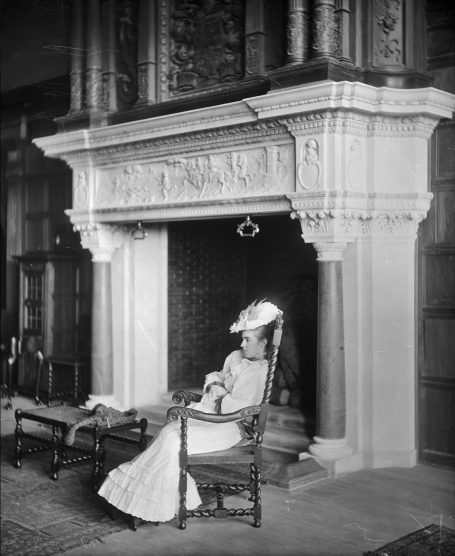
This snub persuaded Edward and Mabel (pictured above centre by the grand fireplace at Rhinefield House) to build a private chapel, resulting in construction of St. Saviour’s Church. Again, this was designed by William Romaine-Walker.
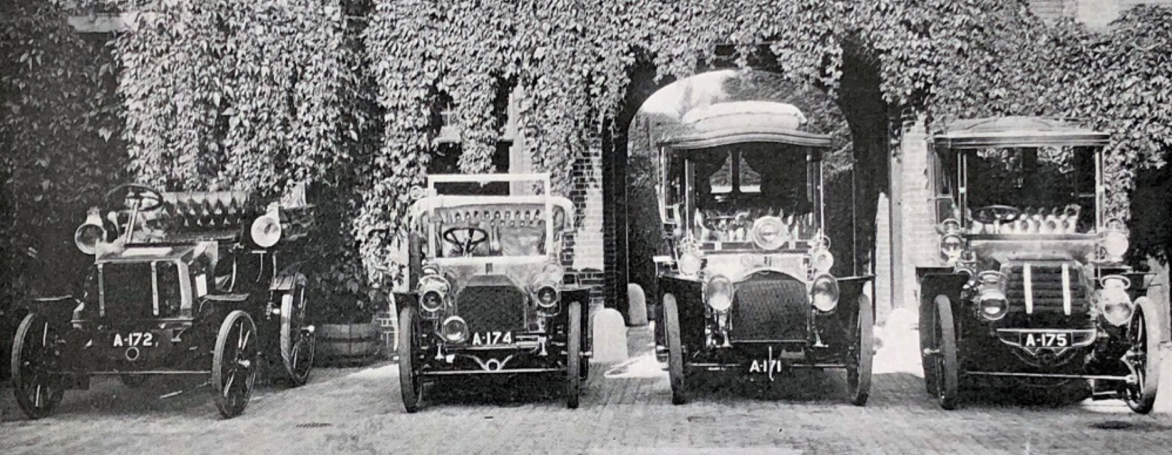
In the 1910’s there was a large house staff and many more were employed in the estate grounds and Home Farm at Ober. Staff included four housemaid, three chauffers (the family owned four motor cars, pictured top right) which was a remarkable expense), two footmen, a butler and several chefs to run the kitchen. There were also ground staff, gardeners and agricultural labourers on the family farm at Ober.
The size of the staff was large enough for the formation of the Rhinefield Sports Club fielding both football and cricket teams. Until the 1950’s the annual Parish Assembly, for the electorate of the Township of Rhinefield, was held at Rhinefield House.
When the Walker-Munro family were at their Scottish home fruit and vegetables were sent up from the kitchen garden. For the summer the family also built The White House, at Milford-on-Sea, an art deco sun-facing house on the clifftop where they lived for extended periods. To aid its preservation, a £3,000 sea defence wall and groyne was built by the family beneath the cliffs. They also maintained a house in South-West London.
On Sundays the living-in maids would be conveyed to St. Saviours by carriage to attend the service. Behind the church was a shed - this is where all the estate's ground workers and labourers would be paid each Friday.
The staff living off the estate were provided annually with a sufficient winter supply of top-quality coal brought from the family’s mine in Nottinghamshire. The Walker-Munro family also gave a staff Christmas party each year at the house. It is also said that the family maintained a private carriage at Brockenhurst Station, kept on the sidings they had paid for. When they wanted to travel to London the Up train paused for a brief time, so that their carriage could be attached.
In the first world war the Walker-Munro’s paid for and equipped a hospital for wounded soldiers in Eastbourne. Lieutenant Commander Edward Munro died on 2 July 1920. Initially he was buried on the family Ober Farm, as St Saviour’s Church had not been consecrated. Mabel fought for this, eventually threatening the Bishop of Winchester that she’d gift it to the Catholic Church. That resulted in consecration. But the church as designed was never completed because funds dried up. Still wealthy, the cost of a towner and bells was though, beyond her pockets.
Mabel was a considerable philanthropist, and inherited her father’s mines and wealth. She founded the Brockenhurst Nursing Association (in the days when the village had to pay for a nurse), and gave money to Lymington and Milford-on-Sea hospitals. She was Patroness of St Pancras Boy Scouts (London) and Ferndown Girl Guides, and each summer both were allowed to camp in the grounds of Rhinefield House.
She was also President of Brockenhurst Football Club, and arguably its founder, for whom she provided a playing field (before the present pitch in Grigg Lane). She was also a substantial donor to the Fund for Provision of Meals for the Unemployed.
Mabel Walker-Munro died at Rhinefield House on 7 September 1933. Her funeral was begun in private at The White House in Milford-on-Sea, whence 18 cars, to carry among others 40 staff drove to Brockenhurst for the second half of the service at St Saviours. Mabel and Edward (moved after his first resting place) are buried in a private vault inside St Saviours Church.
She had been in the process of changing her will to leave her estate (worth some £6,000,000 in today’s money) to charity, but as she’d not signed the new will, her one son then living in Kenya inherited all. In 1951 the Walker-Munro family sold the remaining 933 years of the Rhinefield lease to pay death duties. But their mark remains on the village.