Preserving the history of Brockenhurst - a wonderful village at the heart of the New Forest
Groups, Institutions and Societies
Brockenhurst's organisations for entertainment, fun, and supporting others
Before the era of television, before radio even, villages like Brockenhurst ran a number of clubs and socieities to provide entertainment, enjoyment, and simply for folk to meet each other and chat. Some of these still survive, while others died as village folk started to stay at home and enjoy entertainment there. You can out about the village's sports club here.
Brockenhurst Women’s Institute
The Women’s Institute was formed nationally in 1915 and encouraged local branches to be set up. The Brockenhurst WI was formed in February 1918. A meeting was held at the Church Room, and the wife of the local MP Mrs Frank Perkins explained the aims to an audience who then voted to establish a village branch. The initial aim to revitalise rural communities and encourage women to become more involved in producing food during the First World War.
Everyday life was not easy for many Brockenhurst ladies and the WI was a way to enhance their lives through friendship and fun. In a much more class divided society than today, the WI brought women together from all backgrounds who had rarely met in the past, and helped to break down social barriers. It opened their eyes to different crafts, skills and talents which were shared between each other.
The founding President was Mrs Mabel Power who lived at White Moor, and after a couple of false starts, the Countess of Northesk was appointed Vice-President living at Whitley Ridge (now The Pig). Early activities ranged from dancing and singing competitions, craft demonstrations, to a public meeting on problems with village housing in 1919, which Frank Perkins MP travelled from London to address. By the end of 1920, the branch had attracted more than 150 members.
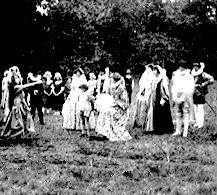
In June 1921, the Women’s Institute branch joined the Church for a dramatic pageant, held in Brokenhurst Park (pictured above left). Over 400 performers took part. It began with a fairy scene, and six subsequent acts covered history including the Romans, William the Conqueror, and a pony fair from the 1820’s.
In 1930 the WI committee proposed a community service by purchasing an invalid chair to lend, free of charge, to anyone in the village requiring its use. The cost with rug and an umbrella holder was £8/8/0d (£8.40). Duly bought, the chair was housed at Colonel Mansell-Jones VC’s home on Burley Road and maintained by their chauffeur until 1937. The chair was very awkward to manage owing to the lack of a steering handle on the small single front wheel. The cost of fitting one in 1943 was 4/6 (22.5p).
In June 1941, Lord Woolton (Minister of Food) made a radio broadcast: ‘If you are among the fortunate people to whom God has given an excess of the kindly fruits of the earth, then be thankful that you may take a real part in helping our country’s food supplies. Collect the fruit - don’t let the sin of waste lie at your door.’
Several in the village heard the message and the Brockenhurst Women’s Institute set up a kitchen to make jam. It’s location is now lost, but the fruit provided was paid for at the prevailing wholesale rate and the WI paid for the sugar and fuel. The work was done by volunteers, who received no privileges whatsoever in the distribution of the jam.
Jam was rationed, and the WI was not permitted to sell direct to the public. The jam was sold at wholesale rate (controlled) to the retailers, and if they were unable to take it all, the Ministry of Food bought the remainder. Careful accounts had to be kept of all sugar used, and no jam was to be offered for sale until it was passed by a Ministry of Agriculture Inspector.
Gifts of 1lb and 2lb size jam jars were much appreciated, the Brockenhurst Bulletin said. The scheme continued during food rationing and in July 1948 the centre moved to a garage at the Watersplash Hotel (now Holmwood). It’s not recorded when the jam kitchen stopped.
Meanwhile, in November 1942, the Ministry of Food decided to inaugurate a scheme to sell meat pies to agricultural workers and communities in places too small to justify having a ‘British Restaurant’ (which were local authority run to provide cheap basic meals).
The WI undertook the business of selling the pies in the village, made at Lowman’s Bakery in Southampton. Each Tuesday morning, the pies, unwrapped on trays, would arrive by train and be taken from the station on a porter’s trolly to Mr. Orman’s garage in Brookley Road (now ‘Dynasty’ restaurant). The scheme continued after 1945 due to food shortages. It was as popular as ever, selling 850 pies at fourpence halfpenny (2p) and 550 sausage rolls at threepence (1.5p) every week.
There was grumbling in the village when the pies were not made available on the Tuesdays after a Bank Holiday! It ended in 1951.
In February 2018 the village WI celebrated its 100th birthday. 100 flower bulbs were planted outside the Village Hall ahead of the milestone. This was followed by a special dinner and event for 70 members and guests at the Balmer Lawn Hotel. The diners were treated to some close up magic, a delicious meal and a cake made by one of the members. There were four previous and current Presidents from the Brockenhurst WI group and the Chairman of Hampshire County Federation.
A saxophonist, Graeme Budd, supplied background music during the meal and accompanied members when they sang a rousing Jerusalem and Happy Birthday. The meal finished with excitement as prizes had been kindly donated by local businesses. To claim these, gold stars had been fixed randomly underneath chairs. All 70 chairs were quickly upturned to identify the winners.
Today, Brockenhurst WI is a thriving group with over 60 members of all ages which meets monthly at the Village Hall, as well as a series of visits and external activities.
Friends of Brockenhurst
After the second world war there was considerable development in the New Forest, new housing, roads, industrial estates and civic buildings. In Brockenhurst there was concern that this ‘improvement’ should not lose sight of the traditional rural aspect of the village.
In 1955, the idea was suggested through the ‘Brockenhurst Bulletin and Church News’ for a ‘protection society’ or ‘ratepayers association’. Key functions would be to increase public awareness of civic responsibilities’ and ‘vetting from an aesthetic viewpoint, proposals for improving the village’. A committee of four people was formed to consider the idea, including a retired army Colonel, a doctor, and the bulletin editor.
On 11 April 1957, some 100 villagers (described as ‘local ratepayers’) filled the Masonic Hall to hear the proposal for a new group. Walter Woodford, a national trades group general secretary who lived in Partridge Road, made the proposal for a new organisation, which was unanimously accepted. The first Chairman was Col. Henry Tapp OBE MC, and a small committee was formed.
The Friends of Brockenhurst was affiliated from the start with the Campaign for the Preservation of Rural England. Its Hampshire Secretary spoke to say that while neither they, nor the new ‘Friends’ had any legal power, they’d do all they could to influence development, stop vandalism, and where possible improve the countryside, for example by planting trees.
The Friends of Brockenhurst were soon underway and causing a fuss. A row broke out in the summer of 1958 when the Rural District Council placed a prominent sign outside the then Lloyds Bank pointing to the village toilets, which was considered distasteful. Jointly with the Parish Council, the Friends offered to pay for it to be moved to a more suitable place. There were stories and letters in the newspapers, and after a short time, the village won, and the sign was moved.
Sixty years ago, the Parish Council wasn’t involved in planning. The Friends of Brockenhurst were concerned that no one was looking at development plans submitted for the village – so it took that role on to comment if something seemed out of place. That continues today, although now the Parish Council is more formally involved (since 1974) also.
In 1991 a key success was persuading the Forestry Commission to reinstate a path from Aldridge Hill inclosure to the tarmac road to Rhinefield Drive, a route now used by hundreds of people every day. What walkers won’t know is that the path (now a road to the Aldridge Hill campsite) has a name – Derry Seaton Passage. He was Chair of the New Forest Association who died in 1991 and the Friends and the Association championed the project in his memory.
Today there are some 150 members of the Friends of Brockenhurst. The key role remains protecting and enhancing Brockenhurst for villagers and visitors. Part of this is a bi-annual newsletter which reaches every home in the village with news of local development and potential issues such as flooding.
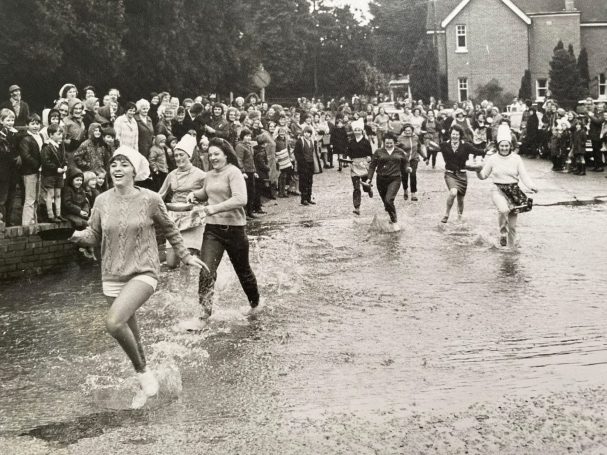
Over the years the Friends have also supported local societies with donations to Oakhaven Hospice, Lymington Hospital, sports clubs and many others, as well as supporting village events such as Brockival and an annual Brockenhurst Quiz. This has also included helping organise and providing medals for the annual pancake races (pictures above centre); the refurbishment of the Wheel from the Village Forge; located at the entrance to Brookley Road Car Park; donations to; Brockenhurst Youth Football Club to help provide equipment; Brockenhurst Primary School PTA for their forest school; a new bowling machine for Brockenhurst Cricket Youth teams; and on-going support to Holidays at Home and donations to Oakhaven Hospice.
Royal British Legion - Brockenhurst Branch
In early 1919, Col. Frank Kane of the East Surrey Regiment, who lived at ‘Green Oaks’ (now rebuilt) in Wilverley Road, led a group which instigated the formation of a ‘Comrades Club’ for the ex-servicemen in the village.
At a meeting in May 1919 the Morant estate offered a suitable site for a building in Fibbards Road for £160. One-pound shares would be offered to the community to finance it with additional funds provided from residents’ contributions, and money raised by the Parochial Entertainments Committee.
Committee members attended the Tile Barn Hill military hospital sale in 1920 and bought two huts, a half size billiard table and other useful items. The two purchased huts occupied half of the Fibbards Road site with the remainder being a bowling green, quoits pitch and lawn. This was completed in September 1920 with an official opening in November by Baron Mount Temple Col. Wilfred Ashley, who was MP for the New Forest from 1922 until 1932. He had helped start the national Comrades Club movement. Speeches were followed by musical and dramatic entertainment.
An ‘Armistice Dinner’ was held on 11 November that year and later a Christmas concert was attended by three hundred members and guests and presided over by Col. Mansel-Jones VC. Ladies played a considerable part in raising funds and donating equipment and were duly rewarded with the formation of a Women’s Section.
The Comrades Club became affiliated with the newly formed British Legion in May 1921 but the building remained the responsibility of the Comrades’ Club Trustees who had arranged the land charge with Lloyds Bank. A Brockenhurst British Legion banner was provided by Mrs. Frances Kane, the founder’s widow.
During the night of 26 June 1925 the club building was completely destroyed by fire. The wooden construction with a tarred roof, combined with recent dry weather, contributed to the destruction. Mr. Langley, the steward, kept a goat in a shed at the back which was rescued by Mr. Diamond.
In December 1926 Mrs Kane opened the rebuilt club building. The chairman thanked her for generously providing the new comfortable club, which now consisted of a bar area, billiard room and social room. A loan of £600 had been raised to construct the new building, which was of concrete blocks manufactured at the Brockenhurst Concrete Block factory, where Auckland Avenue is today.
In October 1927 the club ran a Grand Bazaar at the Morant Hall followed by a Grand Dance from 9pm to 2am to help clear debts. Mrs. Kane died in December 1932 and by the terms of her will all the trustees’ outstanding debts on the building were paid off.
On summer evenings during the 1930’s the lawn was the venue for dancing to the Brockenhurst Band and outdoor whist drives.
At around 3am on 14 August, 1940, a bomb fell in the middle of the building. The steward, Mr. Hardiman, was sleeping on the premises as his home being fully occupied by visiting relatives. On the wall above were antlers which were dislodged by the exploding bomb and fell wrapping themselves around his neck. The building end parts were temporarily repaired and used until full restoration in 1949.
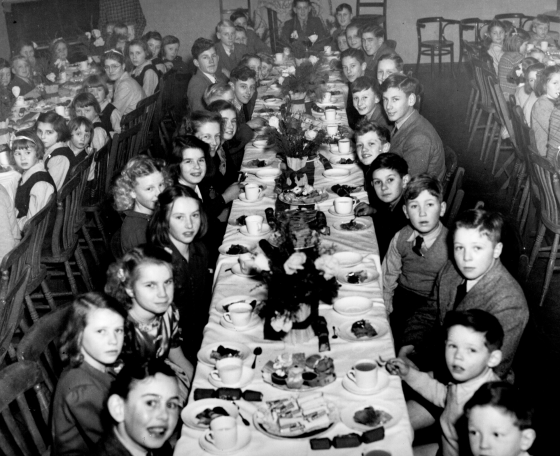
During the 1940’s the village had its ‘cinema’ at the Legion Club, with film shows on Saturdays. The Royal British Legion also held large parties for the community, and especially for the children at Christmas time. The first of these in 1944 was organised by Canadian Forces stationed at the Balmer Lawn Hotel. Immediately after the war, the party had to be delayed until the following February, as rationing meant all family supplies were used at home in December. (The picture above right shows the 1944 party.)
Talent displayed at a gathering in the British Legion Club after a ‘comic cricket match’ at a Gala Week in 1950’s resulted in the forming of the Village Pantomime. With advent of television the Legion Club membership dwindled and closed in September 1959 when the land was sold for ‘Brookley Court’.
However, the Brockenhurst Branch continued, organising events such as Remembrance Parades at the War Memorial. Events such as an annual jumble sale, and poppy collections swell the coffers of the British Legion nationally. Socially around 25 members meet once a month for a drink and chat. In 2024 the business affairs were taken over by the Hampshire District as the local branch was unable to appoint a Treasurer, necessary for the branch to operate independently.
Former Clubs and Societies – now extinct
The Red Triangle Club
A Young Men’s Christian Association (Y.M.C.A.) recreational hut was erected in 1916 to benefit recovering New Zealand soldiers in Brookley Road where the Auckland Avenue entrance is. It was called the Red Triangle Club after the insignia of the YMCA. There was also a second club for soldiers recovering after treatment at the New Zealand Hospital - the Kia-Ora Club was run by the Forces and was on the corner of Grigg Lane and Brookley Road.
The Red Triangle Club hut was dismantled in 1919, and re-erected by the workshop of Mr. Hendy’s garage in Avenue Road, where Kingsford Court is today. This Red Triangle Club catered for young men, offering a games room, library and social evenings. Young ladies were admitted to membership in September 1927.
In 1927, the Brockenhurst Bulletin reported on a concert at the Morant Hall, a social evening with 100 attending and that the club was starting a ‘Physical Culture’ class. The club closed in the early part of 1928 for reasons which have been lost in history.
The Brockenhurst Nursing Association
In the Church News of December 1899, the Rev. Rupert Paine gave a final report of his time in Brockenhurst.
From the charitable accounts, for which he was responsible, was the provision of the services of Sister Margaret (a forerunner to the District Nurse). During her time in Brockenhurst she made 1,816 visits to those she had nursed, the cost of which was borne by the Church finances.
By 1912 the cost of providing a nursing service for the poor of the Parish could no longer be sustained by Church so the vicar, the Rev. Arthur Chambers, called a meeting. The Brockenhurst Nursing Association was formed to employ the services of a qualified nurse and provide her with accommodation and all the equipment that she required.
The committee was always chaired by the vicar of the day and composed of about twenty members from organizations in the community and included the doctors. They organised fund raising and the Queen Alexandra Rose Day collections.
Prior to 1930 the nurses had lodged in various houses in the village so it was decided that a home should be provided for her. The property, ‘Heathview’ in Meerut Road near the corner with Rhinefield Road, was converted to be the parish District Nurse’s cottage (known as ‘The Nurse’s Home and Dispensary’) which was completed in 1931.
The land on which it is built was donated by the late Mrs. Wilkinson and the building cost of £350, was donated by Mrs. Groome, together with an endowment of £1,000. The endowment was to be invested and the interest to be put to ‘the running costs of the home and provide it with labour-saving devices and equipment which were necessary to such a busy person’.
Beneath the corner stone is a cavity into which documents recording that the building is a memorial to Robert Edward Charles Groome the donor’s husband, Harry Groome her son killed in the First War and Bernice Wilkinson. Harry Groome’s regimental ribbons and coins of the realm, for that year, were also put in.
In 1948, the new National Health Service took over responsibility for the District Nurse. The Trust, originally known as ‘Residence for the District Nurse’, was changed to ‘The Groome Trust’ when the cottage was sold in. The proceeds, are now used to provide support for less well-off families, and some community projects.
The Parochial Entertainments Committee
This committee organised entertainments to support village organisations. Their annual programme started in September and consisted of Whist Drives, Concerts, Plays and Dances finishing with the Easter Monday Dance.
The highlight was the Boxing Night Dance in the Morant Hall, when over 400 people would dance to the villages’ Miss Milani’s Orchestra until 1.30 in the morning. The closing event, the Easter Monday Dance, attracted a similar number of dancers.
After April each year the profits were distributed to the following organisations: C of E School; Nursing Association; New Forest Ambulance; Brockenhurst Band; Cricket Club; Football Club; Hospitals Committee; Boscombe & Southampton Hospitals and any other local appeal at the time.
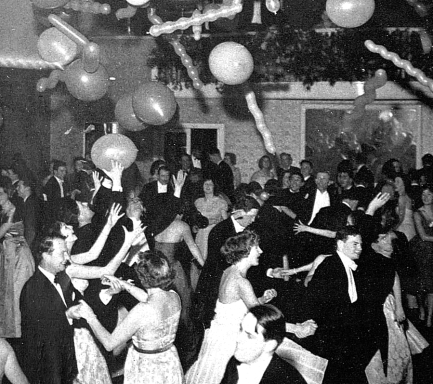
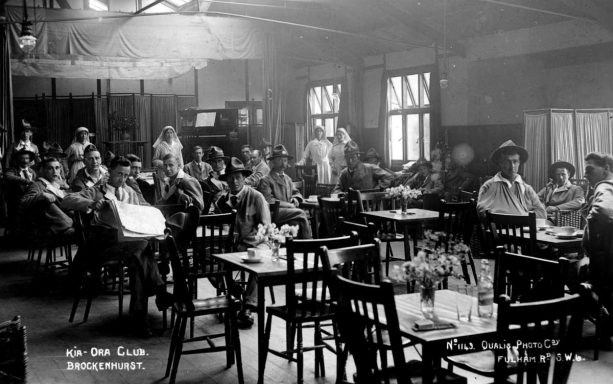
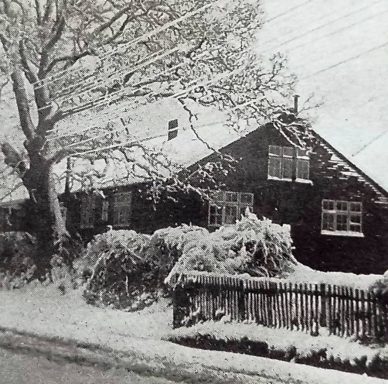
Left to right: New Year's Ball at the Morant Hall 1960; Ther Kia-Ora Club 1918; The Red Triangle YMCA Club 1919;